
The Medical Nutrition Therapy for Prevention (MNT4P) Program at Emory University is a leader in inherited metabolic disorder care. They unify research, training, and direct patient services all under one roof. Here’s how we helped them build a digital home that matched their mission.
Supporting 650+ Georgia families with inherited metabolic disorders starts with a site they can use.
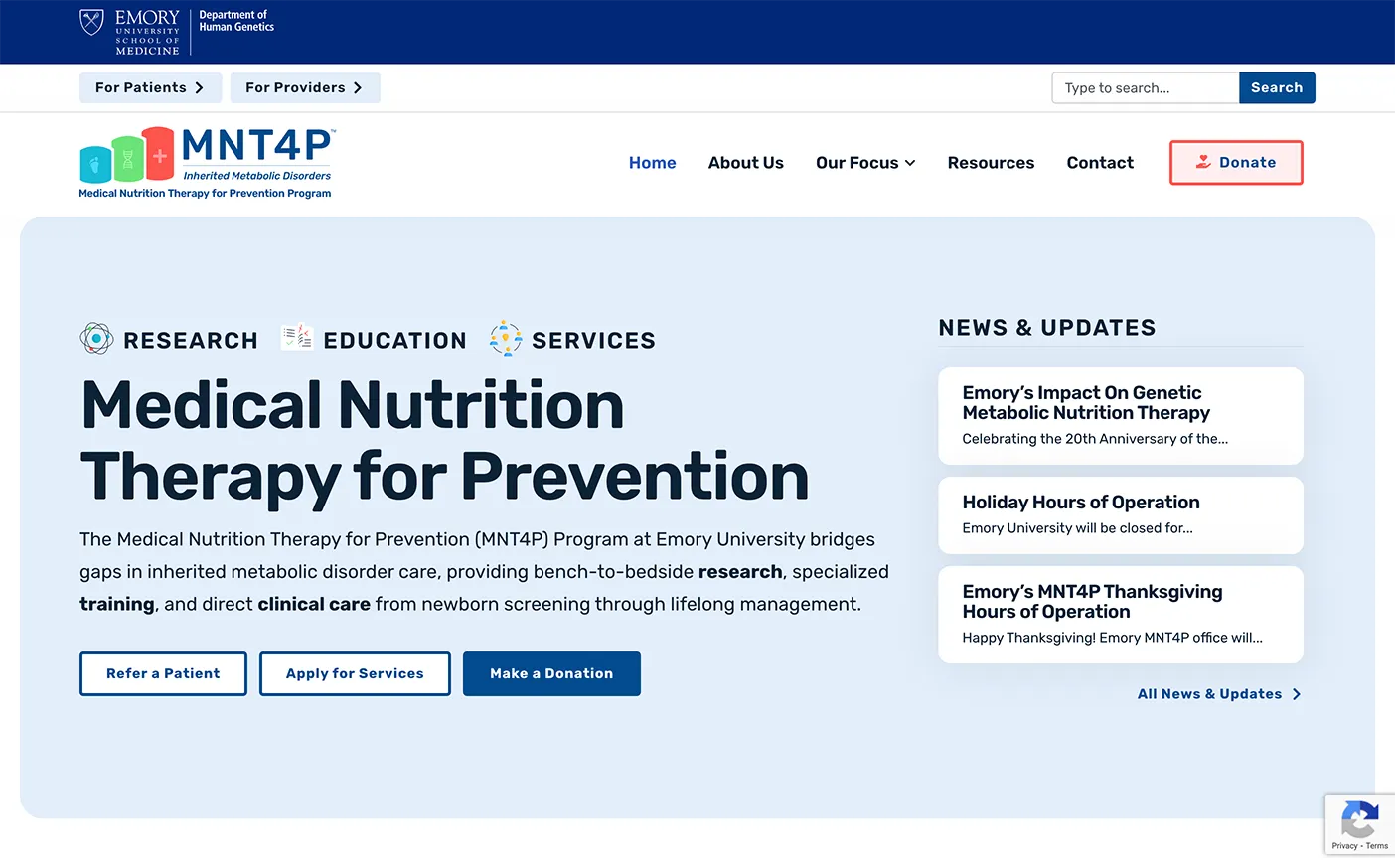
MNT4P’s first-generation site served them well, but wasn’t telling the whole story. They came to us to make sure site visitors understood they offer more than just clinical services.
As the program grew, content got added wherever it fit, not necessarily where users needed it. Families looking for help with rare metabolic disorders struggled to find answers. Providers wanted clinical protocols. Browsing on a phone added a few other wrinkles. And they suspected all of this was impacting their SEO.
For a program managing 1,500+ monthly medical food shipments, clinical trials, and adjoining clinical services while leading a $2M federal consortium, the website wasn’t quite keeping up.
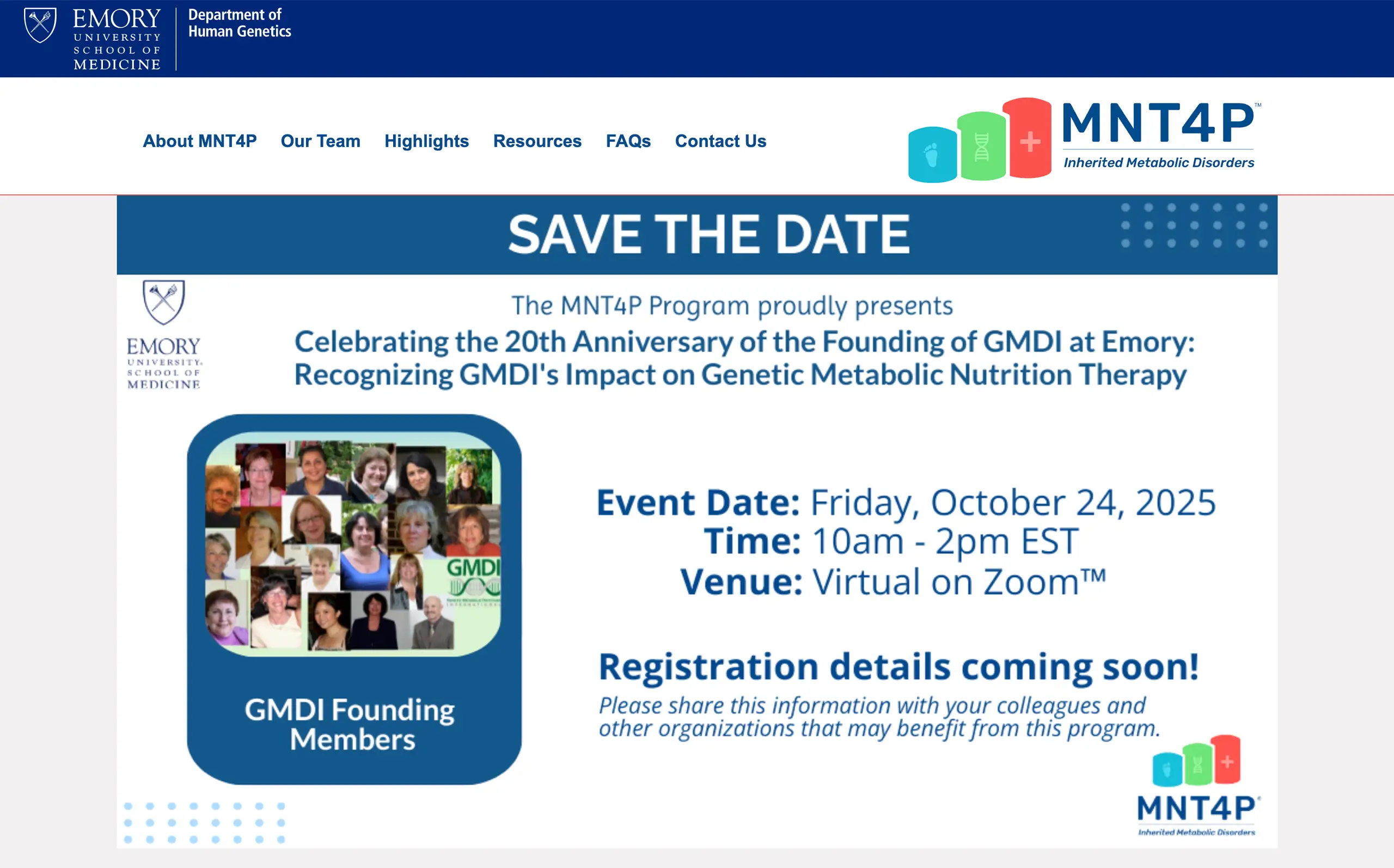
We rebuilt MNT4P’s new site around simplified user journeys, balancing three distinct audiences without creating separate silos.
The homepage now directs visitors to the right pillar right away. Families land on direct service information first. Providers find clinical resources and referral forms quickly. Researchers access publications and consortium details without wading through patient content. And everyone can easily get to other sections if they want to learn more about rare metabolic disorders.
MNT4P had accumulated clinical guidelines, patient toolkits, diet records, research publications, and emergency protocols over the years. We organized these resources by audience and condition so families, providers, and researchers could find what they needed quickly.
We tracked down every resource, and built the Resources page with anchor links so people can jump exactly where they need to go. Families find PKU recipes and medical food information.
Providers access clinical guidelines from SERN and GMDI. Researchers locate publications and trial information. It’s user-friendly navigation that respects how people actually search for help.
MNT4P needed to sound credible to researchers and healthcare providers while remaining approachable for families dealing with rare disease diagnoses. After the big reorganization, the aim was to get the content, site structure, and SEO strategy to work together.
We rebuilt the URL structure and organized categories so search engines, AI chatbots, and people could find what they needed. That way, families searching for “PKU treatment Georgia,” “rare metabolic disease research,” or “inherited metabolic disorder specialist” can easily find MNT4P.
The writing balanced authority and accessibility. We replaced stiffer medical language with more human explanations. The About Us page showcases the real people behind the program with photos and bios that give families a sense of who they’ll work with. This establishes important authority for search engines and AI tools while creating a warm experience for visitors.
We refreshed the visual design to feel more modern and intuitive while maintaining academic credibility to match all the new content. Clean typography, thoughtful use of white space, and imagery reinforce that friendly but professional tone we established in the writing.
Whether healthcare providers are checking resources between appointments or families are researching diagnoses from hospital waiting rooms, MNT4P’s audiences are mobile, and now their site is ready for that traffic.
MNT4P’s team includes brilliant nutrition scientists and dietitians, but not web developers. They needed to manage content themselves but it was a struggle with their old site. We built the entire site in Elementor page builder, creating reusable templates for news, research publications, and service updates. No code required, just type and save. The drag-and-drop interface means they can add content without calling in help.
As with all Clockwork clients, we also trained their staff through hands-on sessions and provided video tutorials so they could manage everything from day one. No waiting on developers, no inconsistent design updates, no guesswork.
MNT4P doesn’t operate in isolation. We integrated their connections to the Emory Metabolic Genetics Clinic, Georgia PKU Connect, and other partner organizations. Referral forms now connect directly to their REDCap database. Resources link to the Southeast Regional Genetics Network guidelines their team helped develop. All of these connections also give them a nice boost in authority that ties into the broader SEO strategy.
We also set up Mailgun for email notifications and Mailchimp integration for their newsletter, allowing them to stay connected with the families, researchers, and providers they work with.
MNT4P has a brand new platform that matches their position as leaders in genetic metabolic nutrition. Families find enrollment information immediately. Providers access clinical protocols without frustration. Researchers discover collaboration opportunities without the runaround.
They also gained the independence to manage their own content:
The site sets them up for growth without needing our support. But if they do decide to take on a phase two in the future, we can easily add features on top of the new foundation.
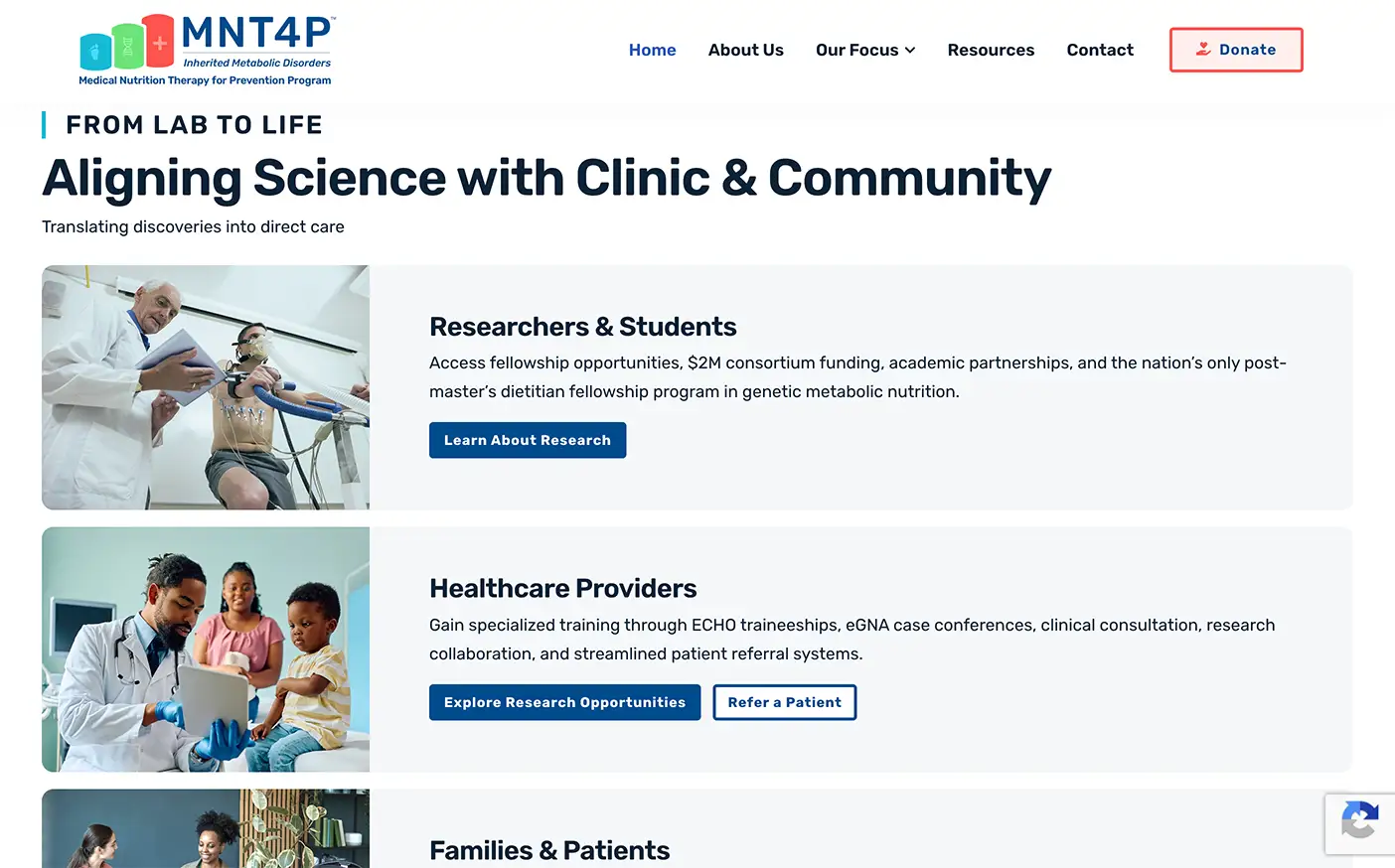
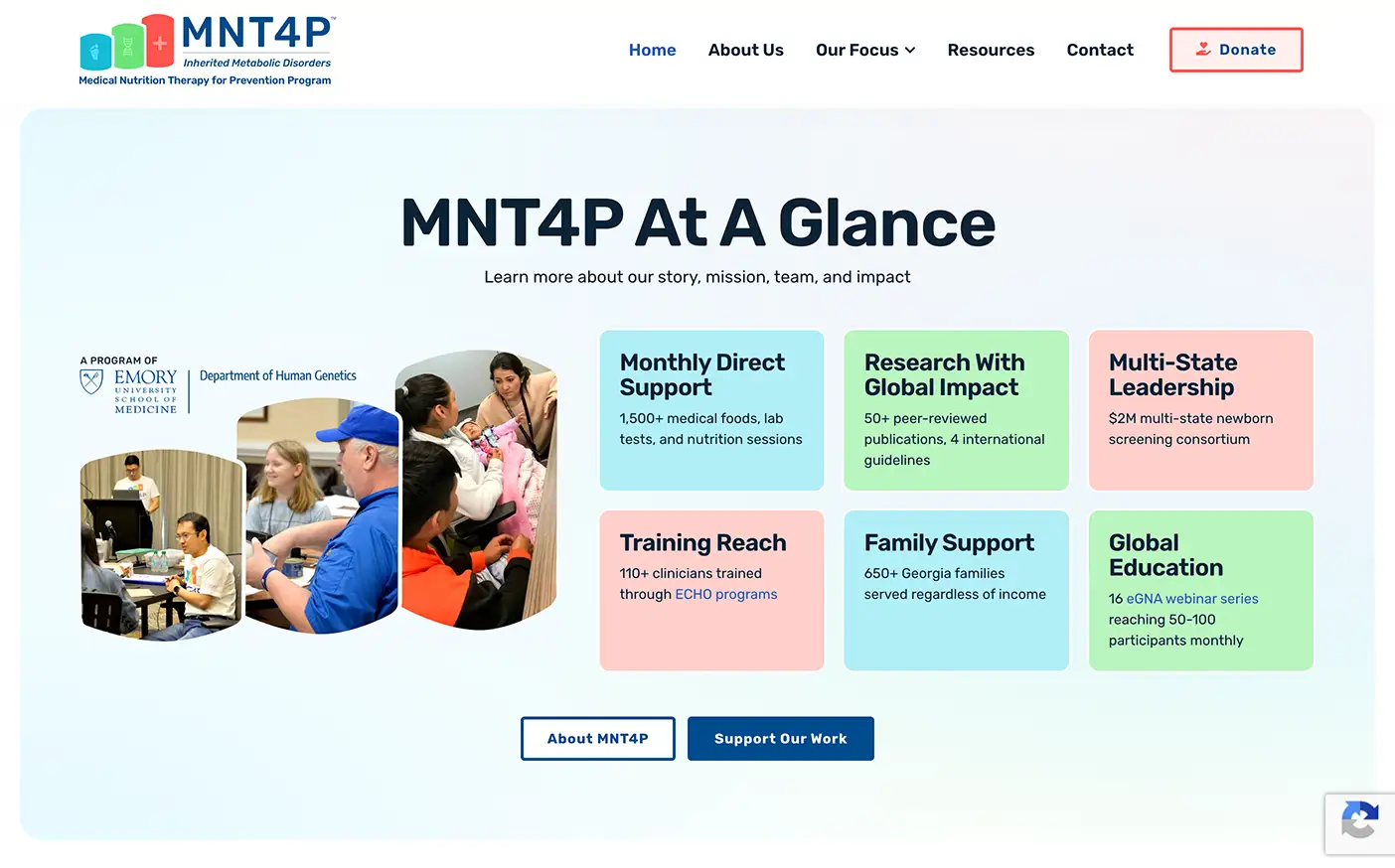
The site brings all of MNT4P’s work together. Research, education, and patient care all have their place, but are presented in a way that’s easy to understand and navigate.
If your website no longer reflects the full scope of your work, let’s talk.