Most business owners don’t have time to track every Google update, and that’s completely reasonable. But every so often something rolls out that’s worth setting aside a few minutes to understand. This past month was one of those moments.
At its annual developer conference in May, Google announced what it called the biggest upgrade to search in over 25 years. That framing got picked up across the industry, and people have reacted to it in pretty different ways. Some are treating it as the end of search as we know it. Others are pointing out that AI Overviews have been part of Google results for a couple of years now, and that the traditional blue links have been losing ground to ads, maps, and AI summaries for a while already.
While both reactions have a piece of the truth in them, things in SEO land continue changing fast. I’ll walk through what’s actually changing and what it means in practical terms.
Google Has Been Heading AI-First for a While, but the Announcement Made It Official
The search experience most people are used to – type something in, get a list of links, and click through to a website – has been changing gradually for years. AI-generated summaries started appearing above results. ChatGPT, Claude, and Perplexity started handling searches that used to go to Google. None of this happened overnight, which is part of why it’s been easy to absorb without fully reckoning with where it’s heading.
What Google announced in May builds directly on that trend, just with more force behind it. Gemini 3.5 Flash, its most powerful AI model, now runs the entire search experience by default. The redesigned search box accepts images, files, videos, and browser tabs alongside text.
AI Mode, Google’s conversational search layer, has already passed a billion monthly users with queries more than doubling every quarter. And later this summer, Google plans to release what it’s calling information agents, background processes that monitor the web continuously, synthesizing results and notifying users without them ever running a search at all.
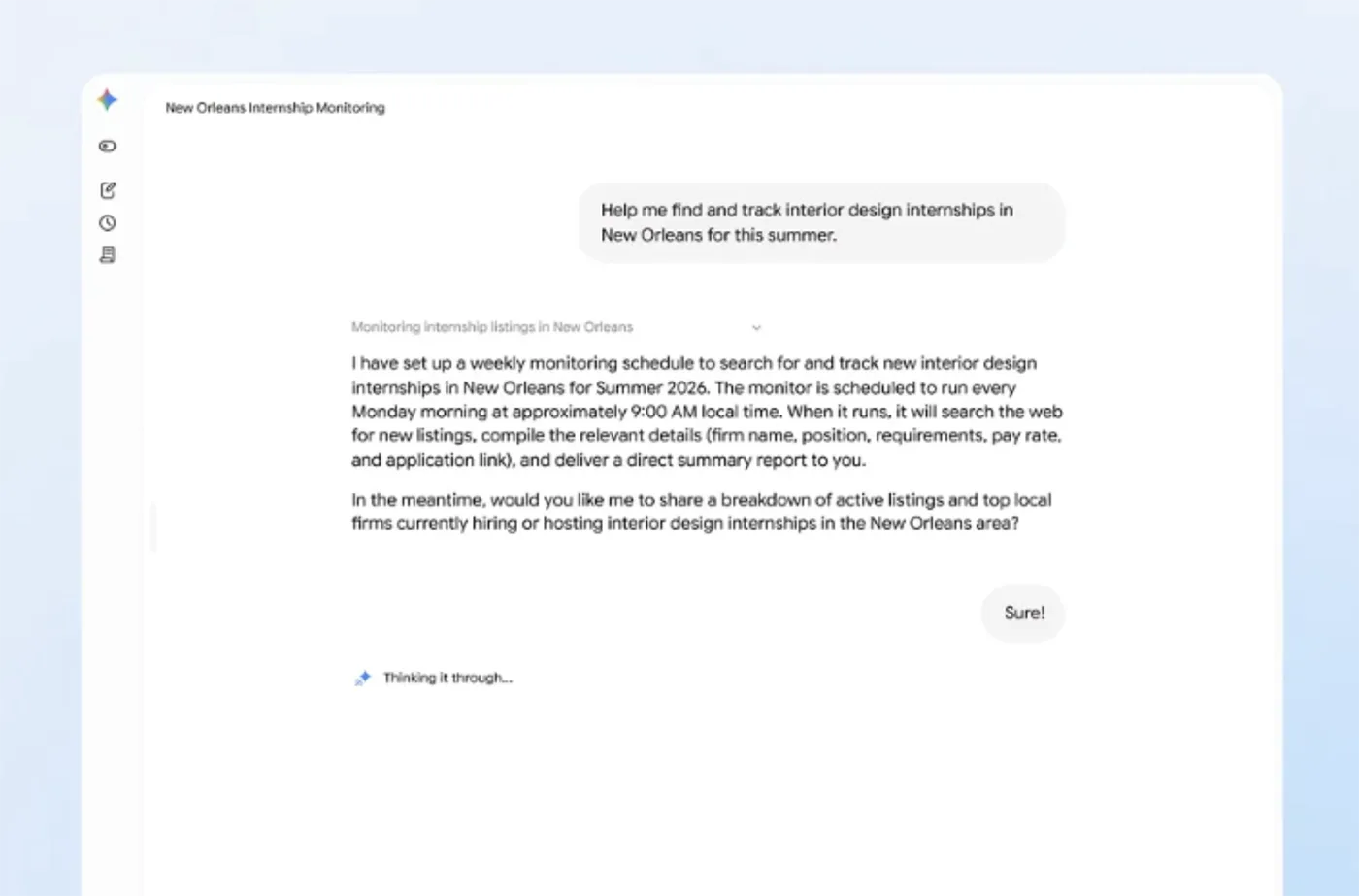
If you’ve used Google search and scrolled past an AI-generated summary to find the familiar blue links underneath, you’ve already seen the early version of this. What’s rolling out now goes further. The search bar itself is being redesigned to understand what you’re trying to figure out rather than just match your words to a page. You can type a question, upload a photo, or drop in a browser tab, and Google generates a chat you can follow up on, the same way you would in ChatGPT. Google says this helps people ask more complex questions and get more complete answers without piecing together information from five different websites.
Any business website that relies on search should plan accordingly. A lot of what used to bring people to your site, including the research phase, comparison shopping, and “what are my options” searches, increasingly happens inside an AI chat that may never send that person elsewhere.
SEO Still Works, It Just Has to Work Harder
Here’s where I’d push back on the loudest “SEO is dead” takes that tend to come out whenever Google makes a major move. The signals AI tools use to evaluate and cite content are largely the same ones Google has rewarded for years. We covered how AI tools run multiple searches behind the scenes through query fan-out and then synthesize a single answer, and what those tools favor is exactly what good SEO has always produced:
- Clear content structure that helps both readers and crawlers navigate a page
- Fast load times, particularly on mobile, where most searches now originate
- Named authorship with verifiable credentials tied to a real person
- Content built around answering specific questions rather than matching keywords
Most people never scroll past the first handful of results on a search page anyway, whether the layout includes an AI summary or not. If your site has historically struggled to rank in those top spots, AI Mode changes the format of the competition more than it changes the stakes.
Google also added a preferred sources feature inside AI Mode where users can flag sources they trust, and those sources get labeled and prioritized inside AI-generated responses. Brand credibility is moving from an indirect ranking signal to an explicit one. If your site has been putting out consistent, well-authored content over time, that matters more now, not less.
Nobody Has the Full Map Yet (Including Google)
Anyone telling you they know exactly what search is going to look like by the end of this year is overstating their certainty (or has a crystal ball they aren’t telling you about). Google is actively rebuilding a global search system that’s been around for 25 years, and even their internal teams are giving conflicting guidance on the same technical questions right now. The infrastructure is changing faster than the instructions for it.
That doesn’t mean the right move is to overhaul your entire strategy in response to a headline. The sites that hold up through changes like this are the ones built on a clean technical foundation with content that meets real user needs. Fast, well-structured, credibly authored sites do well in traditional search and they’re what AI tools look for when deciding what to cite. Those two things used to feel like separate concerns, and they’re increasingly the same one.
If you haven’t looked closely at how your site performs across both traditional and AI-powered search, a free SEO audit is a practical way to get a clear baseline. We run professional tools alongside a manual review to give you specific, prioritized recommendations rather than a wall of data to interpret on your own.
Not Everyone Is Racing Toward AI Search
It’s easy to read the headlines and assume the whole internet is sprinting toward AI-first everything. The reality is more nuanced. Traffic to DuckDuckGo’s AI-free search page tripled in the days following Google’s announcement, which tells you a meaningful portion of people are pumping the brakes.
Some searchers are skeptical on principle, others just want search to work the way it used to, and plenty more will end up using AI-powered tools without ever consciously choosing them because the browser will handle it quietly in the background.
We get that. There is a lot happening in the world, and staying on top of every shift in how Google works is hard to prioritize when you’re running a business. What we do is keep our ear to the ground, factor these changes into the strategy we build for our clients, and make sure the sites we work on are technically ready regardless of how things shake out.
What to Focus on While the Search Dust Settles
Google also launched a core algorithm update the same week as the I/O announcements, which makes any traffic movement in Search Console right now difficult to read cleanly. Wait until the rollout finishes before treating fluctuations as a definitive signal. The rollout can take up to two weeks.
Beyond that, the way people reach your website is shifting. What makes your website worth reaching hasn’t changed. Fast, clear, well-authored sites built around genuinely useful content hold up through algorithm changes because that’s what every version of search, AI-assisted or otherwise, has always rewarded.
Websites aren’t going anywhere, but how people find them keeps evolving. Staying calm and focusing on fundamentals serves you better than overhauling everything in a panic. If you want a clear read on where your site stands now, a free SEO audit is a good place to start.