Every website competes under the same basic SEO rules. Helpful content, a fast site, and clean structure give you a fair shot at the first page. Google holds certain topics to a stricter standard, though. When a page could affect someone’s health, bank account, safety, or legal future, Google wants stronger proof that the people behind it know the subject well.
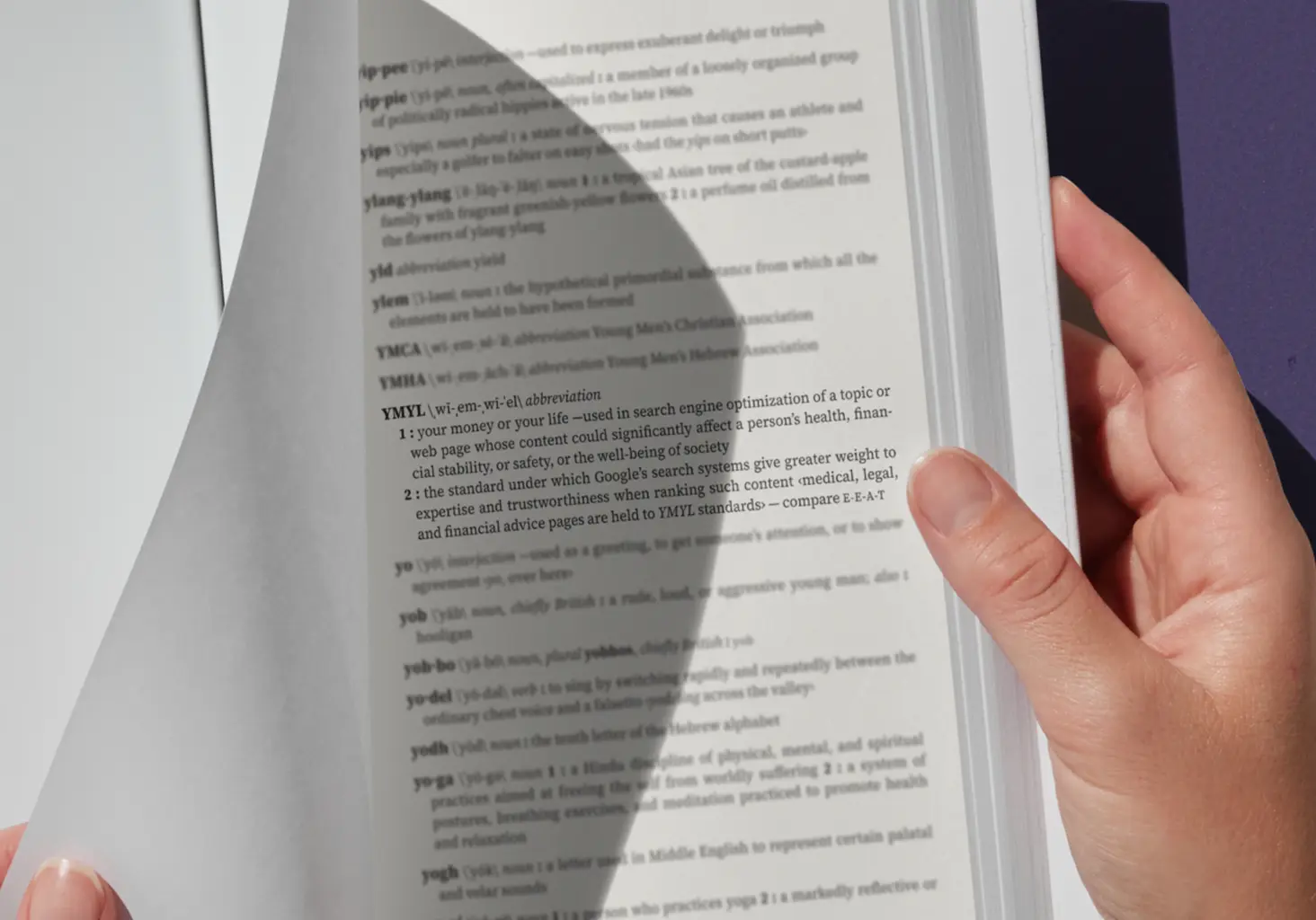
Google calls these topics “Your Money or Your Life,” or YMYL. Once you know which of your pages potentially fall into that group, you can give Google and AI search tools the proof they look for before they trust your content (and serve it up for searchers).
What YMYL Means for Your Website
Google uses the YMYL label for topics where bad information could hurt someone. In its guide to creating helpful, reliable, people-first content, Google explains that its systems give extra weight to content with strong expertise and trust signals when a topic could significantly affect people’s health, financial stability, safety, or the well-being of society in general.
The term comes from Google’s Search Quality Rater Guidelines, a handbook for the people Google hires to review search results. These raters have no control over rankings, and Google does not use their scores directly in its algorithms. Google describes rater feedback as similar to comment cards from restaurant diners. While comment cards tell the kitchen whether its recipes work, rater scores tell Google whether its algorithms reward the right pages.
In September 2025, Google clarified its YMYL definitions and added election information and trust in public institutions to the government and civics category. As of mid-2026 when this post went live, the September 2025 edition was still the current version of the guidelines.
How to Tell Whether Your Topics Count as YMYL
Google sorts YMYL topics into a few main categories, and each one covers plenty of everyday business content.
- Health or safety. A clinic’s symptom explainer or an HVAC company’s page about carbon monoxide can affect someone’s physical well-being.
- Financial security. A financial advisor’s retirement guide or a credit union’s article on rebuilding credit can shape major money decisions.
- Government, civics, and society. Voting information, public agency guidance, and content about public institutions can affect whole groups of people at once.
- Other topics that could cause harm. Google leaves room for sensitive topics that fall outside the first three groups.
The rater guidelines also offer a practical test. Ask whether a careful person would look for experts or highly trusted sources to avoid harm, and whether even small mistakes could hurt someone. A yes to those questions likely puts the topic in YMYL territory.
The test works at the topic level more than the industry level. A law firm’s post about its holiday party poses no real risk to readers. A plumber’s page about what to do when you smell gas poses a serious problem, since one wrong instruction could put a family in danger. When any of your pages give advice people act on about their health, money, or safety, Google holds those pages to the stricter standard.
Trust Carries the Most Weight in Google’s E-E-A-T Framework
Google evaluates YMYL content through a framework it calls E-E-A-T, short for experience, expertise, authoritativeness, and trustworthiness. According to Google, “trust is most important” of the four, and the other three help build it. Google also notes that E-E-A-T does not work as one specific ranking factor. Its systems use a mix of signals that point toward it.
Credentials help your rankings only when readers and search engines can find them. We saw how much that visibility counts with Kuniansky Law, a Houston federal criminal defense practice. Richard Kuniansky has practiced law for more than 40 years and spent seven of them as a federal prosecutor. Criminal defense falls under YMYL because a client’s freedom and future depend on the outcome.
Once we made Richard’s prosecutor background central to his content strategy, the website turned into a real competitive advantage. We carried that authority through his practice pages, articles, and local listings so it felt consistent across the whole site.
What Trust Signals Look Like on a YMYL Website
Google suggests asking three questions about any page. Who created it, how did they create it, and why does it exist? Google also encourages bylines that lead readers to more background about the author. On most YMYL sites, the answers to those questions come through in a handful of trust signals.
- Named authors with bios. Tell readers who wrote each article and why that person knows the topic.
- Relevant credentials. Put licenses, certifications, and years of experience where readers can see them.
- Linked sources. Point factual claims to reputable sources that readers can check.
- Visible dates. Show publish and update dates so readers know the information is current.
- Clear contact details. List a phone number, email, and physical address so visitors know a real business stands behind the content.
- Privacy and security basics. Keep a current privacy policy and a secure HTTPS connection in place.
- Accessible design. Build pages that work for every visitor, including people who use screen readers or keyboards, with help from an accessibility checklist.
Author and organization schema markup helps search engines connect your content to the real people and business behind it. Your homepage also sets the tone (and first impression), which is why we use the Know, Like, & Trust framework to plan those pages during rebuilds for our clients.
Site structure is another exercise in trust-building. On the Kuniansky site, we fixed indexing problems, improved mobile performance, and cleaned up the paths between practice pages and related articles. Someone worried about a federal investigation wants answers fast, and a confusing website with unclear navigation makes that person doubt the firm behind it.
AI Search Tools Look for the Same Trust Signals
Wondering whether trust signals still count for AI search on tools like ChatGPT, Claude, or Gemini? The short answer is yes. AI tools want trustworthy answers from sources they can cite with confidence. Named authors, verifiable credentials, and clear contact information all help, especially as query fan-out turns one question into several searches.
The September 2025 update from Google’s YMYL list added examples for rating AI Overviews. The guidelines also give the lowest quality rating to content that someone copied, paraphrased from other sites, or generated with AI in a low-effort way. Google warns that using automation to produce content mainly to manipulate rankings violates its spam policies, which we cover in another article dedicated to writing on the web in the age of AI.
AI speeds up plenty of good work, and our development team uses it for coding and prototyping. For YMYL content, a real expert still needs to write or review anything that goes out under their name. For Kuniansky Law, we built content around the specific questions people ask when they face federal charges. As Clockwork’s SEO specialist, I worked with our writers to generate content that performs in traditional search results and in AI-generated summaries.
YMYL Rewards Patience Over Shortcuts
Trust takes time to build, and YMYL sites feel that slower curve more than most. Shortcuts carry bigger risks, too. We’ve cleaned up after agencies whose manipulative link schemes got clients penalized, and recovering from a penalty often takes 12 to 18 months.
Patient, well-planned SEO builds visibility that drives real results. A year into the Kuniansky strategy, organic clicks had risen 1,236% and impressions had climbed 1,705%. The new traffic came from people with real federal legal questions. The site reached position 6.8 for “federal warrant search,” and that query alone brought in 386 clicks a month.
We’re web wizards, so we’ll leave the legal and medical advice to the experts. Our job is to make their expertise easy for Google, AI tools, and searchers to find when they need it most. If your business publishes content about health, money, safety, or legal matters, we can check your E-E-A-T signals and AI search readiness with a free SEO audit and show you where your site may be losing trust.
FAQs About YMYL
Is YMYL a Google ranking factor?
YMYL isn’t a single ranking factor or score. Google uses the label to describe topics where its systems give extra weight to expertise and trust signals. The quality raters who apply the YMYL standard don’t change rankings themselves. Their feedback helps Google check whether its algorithms reward the right pages.
Can one page be YMYL if the rest of my website isn’t?
Yes. Google judges YMYL at the topic level, so a single page can fall under it while the rest of your site doesn’t. An HVAC company’s page about carbon monoxide warning signs is YMYL, even if its blog about seasonal maintenance tips isn’t. Give your highest-stakes pages the strongest author details, sources, and review.
Can AI-written content rank for YMYL topics?
It can, but low-effort AI content faces an uphill battle. Google’s Search Quality Rater Guidelines give the lowest quality rating to content generated with AI in a low-effort way. Google also treats automation used mainly to manipulate rankings as spam. AI can help with research and drafts, but an expert should review and shape anything published under their name.
Does YMYL affect whether ChatGPT, Gemini, or Claude cite my website?
The same trust signals that help with Google also help with AI tools. AI tools look for sources they can cite with confidence, especially on sensitive topics. Named authors, verifiable credentials, and clear contact information all make your content easier to trust. These credibility signals matter as much for AI search as they do for traditional rankings.
Do small businesses need to worry about YMYL?
Small businesses need to think about YMYL whenever their pages give advice that affects someone’s health, money, or safety. A local electrician, accountant, or dental practice can publish YMYL content without realizing it. The fix doesn’t require a big budget. A clear author bio, up-to-date contact details, and strong local SEO basics go a long way.
How long does it take to build trust with Google on a YMYL website?
You can add trust signals like author bios and contact details in a few days, but rankings usually take months to respond. A year into our strategy for Kuniansky Law, organic clicks had risen 1,236%. To find out which trust signals your site is missing, start with a free SEO audit.