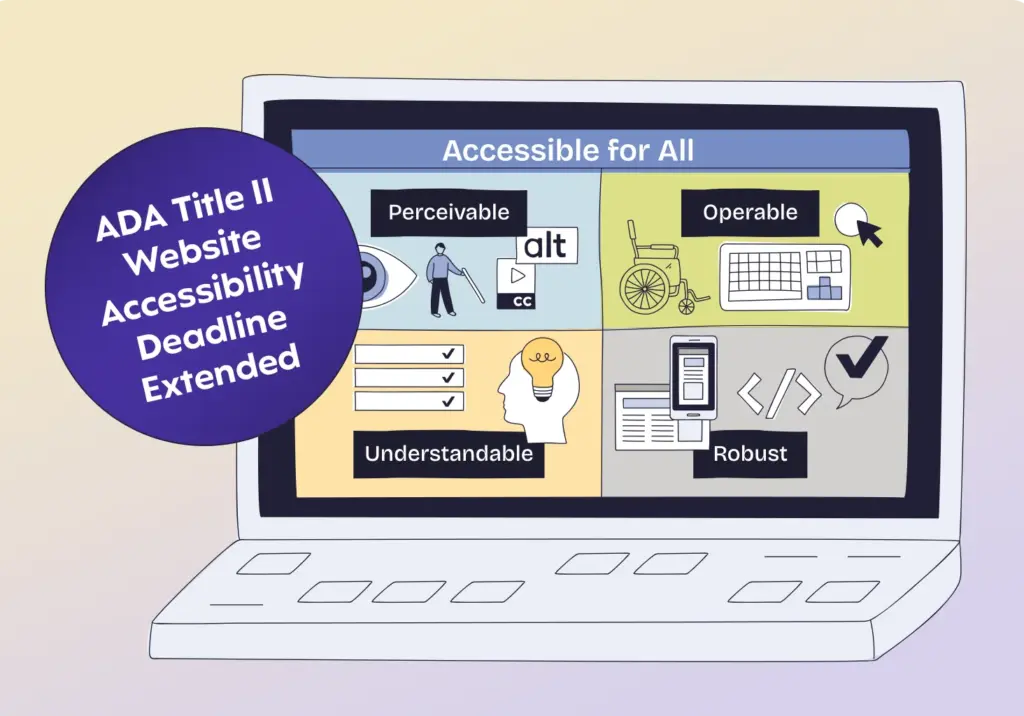
If you’ve seen news lately about a federal web accessibility deadline being extended, you might also be wondering if any of it applies to your website. A lot of people have heard something about a deadline or a rule change and aren’t sure whether they need to take action.
The extension news involves Title II of the ADA, which covers government entities. But a lot of organizations looking into accessibility right now fall under Title III instead, and those two tracks work very differently. This article breaks down who each title covers and tips to stay compliant.
This article covers the regulatory landscape in practical terms and not as legal advice. For specific compliance, working with an attorney who knows ADA is the right move. Our team can help assess where your site stands and implement a remediation plan.
Public Entities Fall Under Title II
Title II of the ADA applies to state and local government entities. In April 2024, it got a lot more specific with a first-ever rule. The Department of Justice enacted concrete technical requirements for government websites and mobile apps. The rule covers:
- State departments and public bodies
- Public school districts and community colleges
- Public colleges and universities
- Transit authorities and special district governments
- Any program or service operated or funded by a state or local government
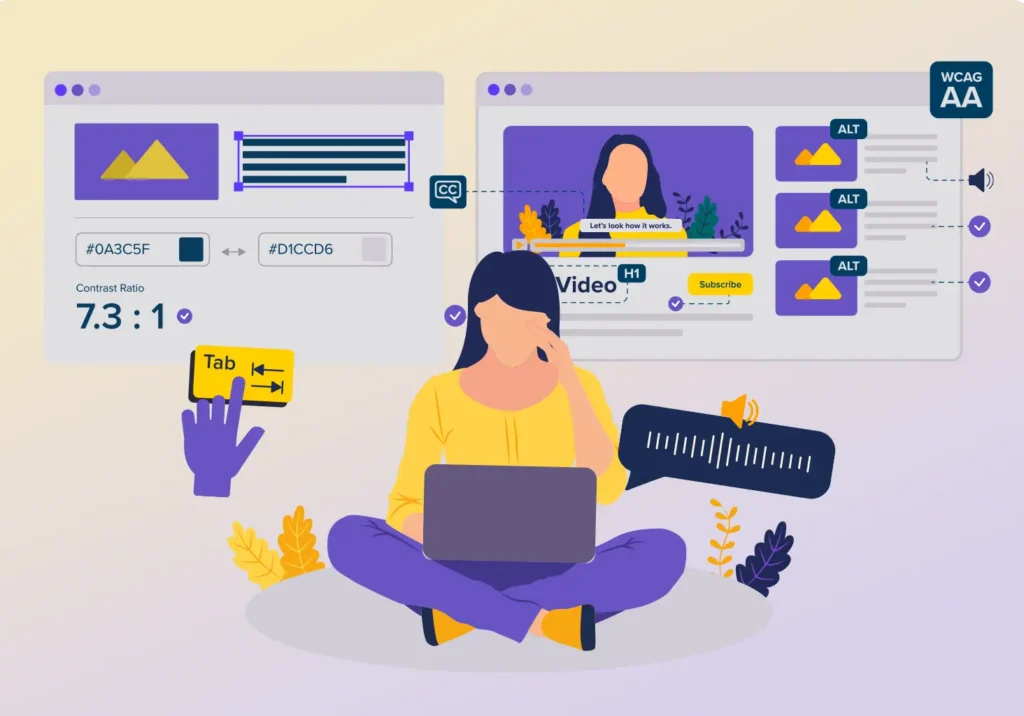
The rule requires sites to adhere to WCAG 2.1 Level AA, the internationally recognized standard for web accessibility. The original deadline for large public entities passed in April 2026, but the DOJ extended it through an interim final rule. Larger entities serving populations of 50,000 or more now have until April 26, 2027, and smaller entities and special district governments have until April 26, 2028.
The scope of the rule is broad. Websites, mobile apps, PDFs, and any third-party tools your organization uses to deliver public services fall under it. We worked on this first-hand with projects like the Georgia Department of Education, where accessibility was part of the plan on just about every layer of the project. Organizations that treat it as an ongoing (and evolving) strategy rather than a deadline problem set themselves up for success.
Private Businesses and Nonprofits File Under Title III
Title III of the ADA applies to private businesses and nonprofits that serve the public. The legal term is “public accommodations,” which sounds narrow but covers a wide range of organizations:
- Retailers, restaurants, and hotels
- Healthcare providers, hospitals, and private practices
- Banks and financial services providers
- Private schools, colleges, and universities
- Entertainment venues and cultural institutions
- Most organizations that serve the general public, online or in person
Unlike Title II, there is no DOJ rule establishing a specific technical standard or a hard compliance deadline for private organizations. Title III has been applied to websites and apps through case law, DOJ guidance, and enforcement actions for years, but the framework is enforcement-driven rather than deadline-driven. DOJ enforcement under Title III has quieted in recent years, and private litigation has grown steadily to fill that space. WCAG 2.1 AA is what courts and settlements keep landing on, rule or no rule.
That absence of a hard deadline shouldn’t be read as an absence of risk. Nearly 5,000 Title III website accessibility lawsuits were filed in 2025, with 2026 on pace to increase by nearly 20% over that. Demand letters typically arrive before formal litigation, and settlements range from a few thousand dollars into six figures before factoring in legal fees and remediation costs. ECommerce, food service, and healthcare see the heaviest volume.
Table: Title II vs. Title III of ADA
The differences between the two titles are significant enough that the path forward looks pretty different depending on which one covers your organization. Here’s a practical comparison:
|
|
Title II
|
Title III
|
|---|---|---|
|
Who it covers
|
State and local government entities
|
Private businesses and nonprofits serving the public
|
|
Examples
|
Public schools, city agencies, transit authorities, public universities
|
Retailers, private colleges, hospitals, banks, restaurants
|
|
Technical standard
|
WCAG 2.1 Level AA, codified in federal regulation
|
WCAG 2.1 AA in practice, via case law and settlements
|
|
Federal deadline
|
April 26, 2027 (large entities) / April 26, 2028 (smaller)
|
No federal deadline
|
|
Enforcement
|
DOJ investigations and private lawsuits
|
Private lawsuits and DOJ actions
|
|
Primary risk
|
Regulatory enforcement, loss of federal funding
|
Private litigation, demand letters, settlement costs
|
It’s worth noting that private companies that build or maintain digital services on behalf of public entities can inherit Title II obligations on those specific programs. If a private firm manages a city’s permitting portal, the government entity remains responsible for ensuring the site meets WCAG standards, and those requirements flow to the contractor.
Private and public universities are good examples. Public institutions fall under Title II with specific deadlines and federal regulation. Private institutions fall under Title III with no federal deadline but an active litigation environment from students, faculty, and prospective enrollees. The compliance target ends up looking similar, even though the legal tracks differ considerably.
Figure Out Your Accessibility Baseline
Whether you’re a government entity working toward the 2027 deadline or a private organization trying to understand your exposure, you need to know where your site currently stands.
Free tools like WAVE and Axe DevTools are a good first accessibility pass, but they catch about roughly 30 percent of issues. The rest requires keyboard and screen reader testing to find what automated scans miss. Our website design accessibility checklist is a practical starting point if you want to do an internal review first.
For a more thorough read, our free accessibility audit delivers a prioritized report with issues ranked by severity. We know the web side of this pretty well by now and will always be clear about where legal counsel needs to take over. Reach out and we’ll take a look.
Frequently Asked Questions
What is the difference between ADA Title II and Title III?
Title II covers state and local government entities, including public schools, universities, municipalities, and transit authorities. Title III covers private businesses and nonprofits that serve the public, known as public accommodations. Both titles have been applied to websites and digital services, but they differ significantly in how compliance is defined and enforced. Title II now has a codified federal standard with specific deadlines. Title III has no federal deadline but carries active litigation risk, and courts frequently apply the same WCAG standard in cases against private organizations.
Does my nonprofit website need to be ADA accessible?
Most nonprofits fall under Title III as public accommodations, not Title II. There is no federal compliance deadline, but that doesn’t eliminate legal exposure. Title III lawsuits against nonprofits and private organizations have increased steadily, and the absence of a hard deadline has not reduced litigation activity. If your nonprofit provides services online and serves the public, treating WCAG 2.1 AA as your accessibility target is a reasonable place to land. Our free accessibility audit is a low-stakes way to get an outside read on where your site stands.
Is there a federal deadline for private business website accessibility?
No. The compliance deadlines in the news right now apply specifically to government entities under Title II. Private businesses and nonprofits under Title III are not subject to a codified federal deadline for web accessibility. The DOJ has consistently treated inaccessible websites as potential ADA violations for businesses open to the public, and private litigation under Title III has grown every year. Compliance is effectively required at all times under the law’s general nondiscrimination mandate, even without a deadline attached.
How do I know if my website currently meets accessibility standards?
A combination of automated scanning and hands-on testing gives you the most accurate starting point. Free tools like WAVE and Axe DevTools surface a portion of issues quickly, but manual testing with a keyboard and screen reader catches the problems automated tools miss. Our free ADA accessibility audit covers both approaches and delivers a prioritized report so you know what to address first.