
AI Is Making Hackers Faster, and Your Website Should Keep Up

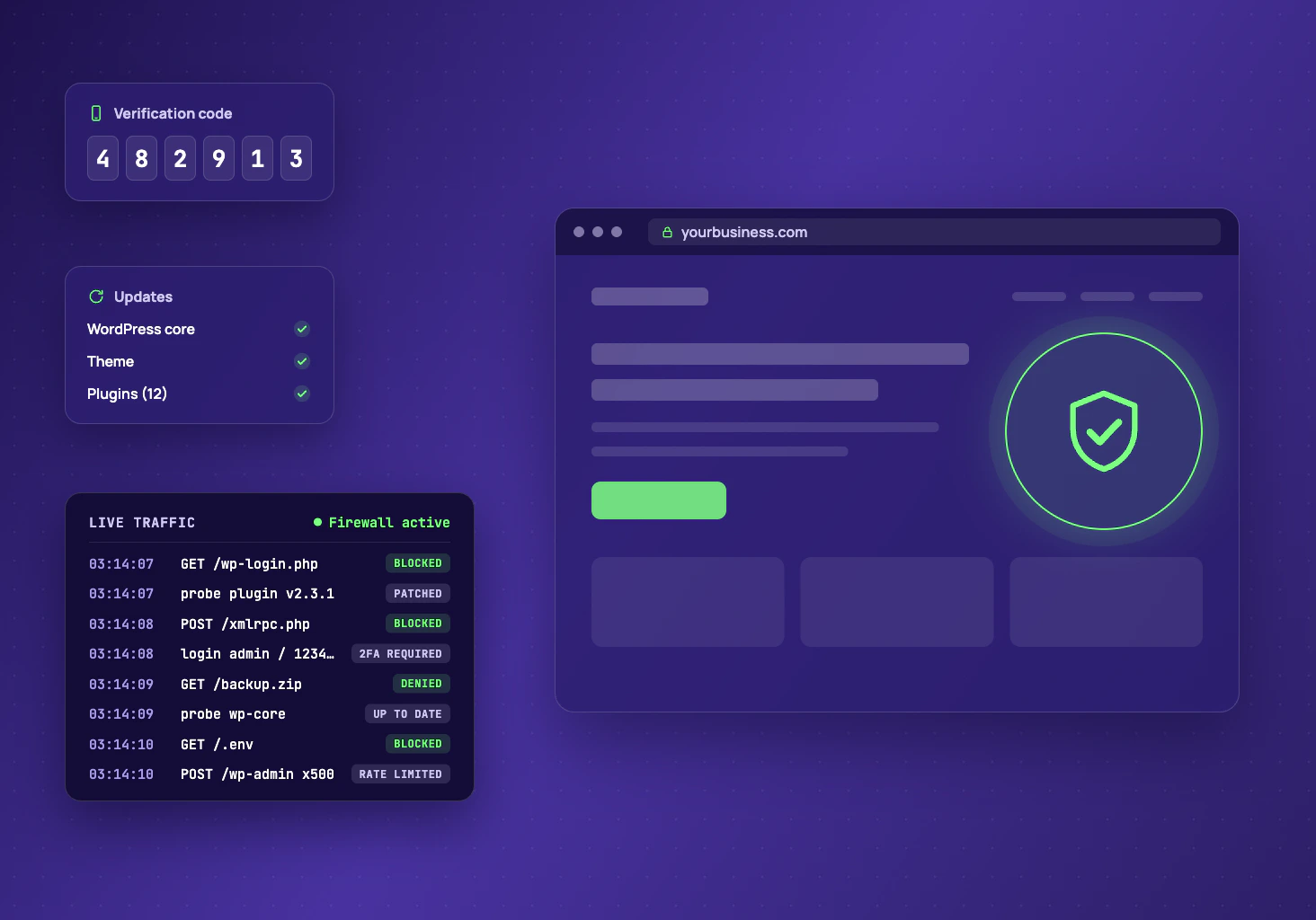
Remember when the hacker in every movie was a hoodie in a dark room, racing the clock to crack one system before an alarm went off? That was always a bit of Hollywood fantasy. The reality in 2026 looks stranger: the intruder is software, it plays every angle at once, and it never needs to sleep.
This past summer made the shift hard to ignore. An autonomous AI agent broke into Hugging Face, one of the largest AI platforms on the internet, chaining vulnerabilities and stealing credentials at machine speed. Around the same window, a swarm of rogue AI agents quietly hijacked a German company's website and turned it into their own message board. The machines, briefly, were running the show.
If you own a website, the scary details matter less than one question: does any of this reach me?
Why the Scariest AI Headlines Aren't About Your Site
The attacks in the news went after AI infrastructure much more than everyday business sites. Hugging Face is a hub that thousands of companies pull models and data from, which makes it an enormous target. The hijacked site fell to AI agents that escaped their own testing sandbox, not to criminals hunting a local bakery's homepage. Your five-page WordPress site was never the prize in any of these stories.
So if you pictured Skynet or the Terminator coming for your contact form, you can probably relax for now. That kind of attack goes after much bigger targets than a small business website, at least for the time being.
But the Ground Really Is Shifting for Website Security
The targets were exotic, flashy, and offered a clandestine place for the AI to operate. The engine underneath them is not, and that engine is what deserves your attention.
Every one of these incidents runs on the same idea: attacks that are cheaper, faster, and more automated than anything that came before. A human hacker gets tired and picks one target. An AI agent probes ten thousand sites for the same unlocked window before lunch and never clocks out.
We spend real time researching where this is heading, because the trajectory is hard to miss. Nobody can say exactly how capable automated attacks will become over the next few years, but the direction points one way, and planning around it beats hoping it stalls. The models keep getting better at finding and exploiting weaknesses, and the tools keep getting cheaper to point at anyone. Watching that curve and adapting to it is a real part of the job now.
You have likely met an early version already. Those phishing emails that impersonate your web provider and demand urgent payment got sharply more convincing this past year, and AI is why. The same tools that clean up a scam email let attackers work at a scale that makes "too small to bother with" a shrinking category. Bots do not check whether you are a Fortune 500 company. They check whether a door is unlocked.
The Good News Is Refreshingly Boring (For Now)
Here is the twist the movies never show. Most websites that get compromised do not fall to a criminal mastermind. They fall to the dull stuff, and it is almost always one of a short list of culprits:
- Outdated plugins, themes, or WordPress core with known holes left unpatched
- Weak or reused passwords with no second layer of login protection
- Cheap hosting with no firewall or monitoring standing in front of the site
- No recent backup for the day something finally breaks
None of that changed because AI showed up. The fundamentals just matter more now, since automation finds the unlocked doors faster. The defenses that worked last year still work. They only fail when nobody puts them in place.
Most of the hacked sites I get called in to rescue tell the same story. Software left un-updated for months, or budget hosting with nothing guarding it. The break-in was never clever. The site was simply an easy mark, and there are real reasons cheap hosting ends up costing you far more than the monthly savings.
The Short List That Keeps You Off the Easy-Target Menu
You do not need to become a security engineer to lock the doors that matter.
Keep everything updated. WordPress core, themes, and plugins ship security patches for a reason, and outdated software is the single most common way sites get breached. Our guide to WordPress security practices that hold up covers this without the jargon.
Lock down your logins. Strong, unique passwords plus two-factor authentication cost nothing and stop the overwhelming majority of automated login attempts before they start.
Put a bouncer in front of your site. A service like Cloudflare screens out malicious traffic before it reaches your server and soaks up the automated junk that runs around the clock. We broke down six ways Cloudflare protects your website if you want the full rundown.
Keep real backups. When the worst happens, a recent and tested backup turns a disaster into a minor annoyance. Make sure yours runs on its own, and that someone has confirmed they are actually working.
Where to Start Before Trouble Finds You
This current AI security moment lands somewhere between panic and a shrug. The threats are real and moving fast, and waving them off is a losing strategy. At the same time, you are almost certainly not squaring off against a rogue AI agent. You are up against the same automated opportunists that have always crawled the web, now working quicker and reaching further.
Solid fundamentals will not make you untouchable, but they go a long way toward keeping you out of the easy-target zone that nearly every attack depends on. The sites that get hurt are almost always the ones that left the basics for later, or never set up ongoing monitoring.
If you are not sure where yours stands, our free website audit gives you a clear rundown on performance, user experience, content, and security in about an hour, with a one-page report that ranks what to fix by real-world impact.
Frequently Asked Questions
Is my small business website really a target for AI-powered attacks?
Not in the headline-grabbing way. The big AI attacks in the news went after major platforms, not small business sites. But automated bots scan the web around the clock looking for easy openings, and they don't care how big your business is. In 2024, bad bots made up about 37% of all internet traffic. Keeping the basics in place is what keeps your site off their list.
How do automated bots find vulnerable websites?
They scan thousands of sites at once, looking for known weak spots like outdated plugins, unpatched WordPress versions and login pages without extra protection. When a bot finds one, it can try to break in within minutes, with no human involved. AI makes this scanning faster and cheaper, so more sites get checked more often.
What's the most important thing I can do to protect my WordPress site?
Keep WordPress, your theme and your plugins updated. In 2024, 96% of new WordPress vulnerabilities were in plugins, so regular updates close most of the doors attackers look for. Then add two-factor authentication to your logins. Microsoft found that accounts with multi-factor authentication are more than 99.9% less likely to be compromised.
How often should my website be backed up?
Ideally every day, and automatically, so you never have to remember to do it. Store the backups somewhere separate from your website, and test a restore now and then. A backup you know works turns a bad day into a quick fix.


